Integrating Eco-Friendly Stationery Into Your Product Lineup
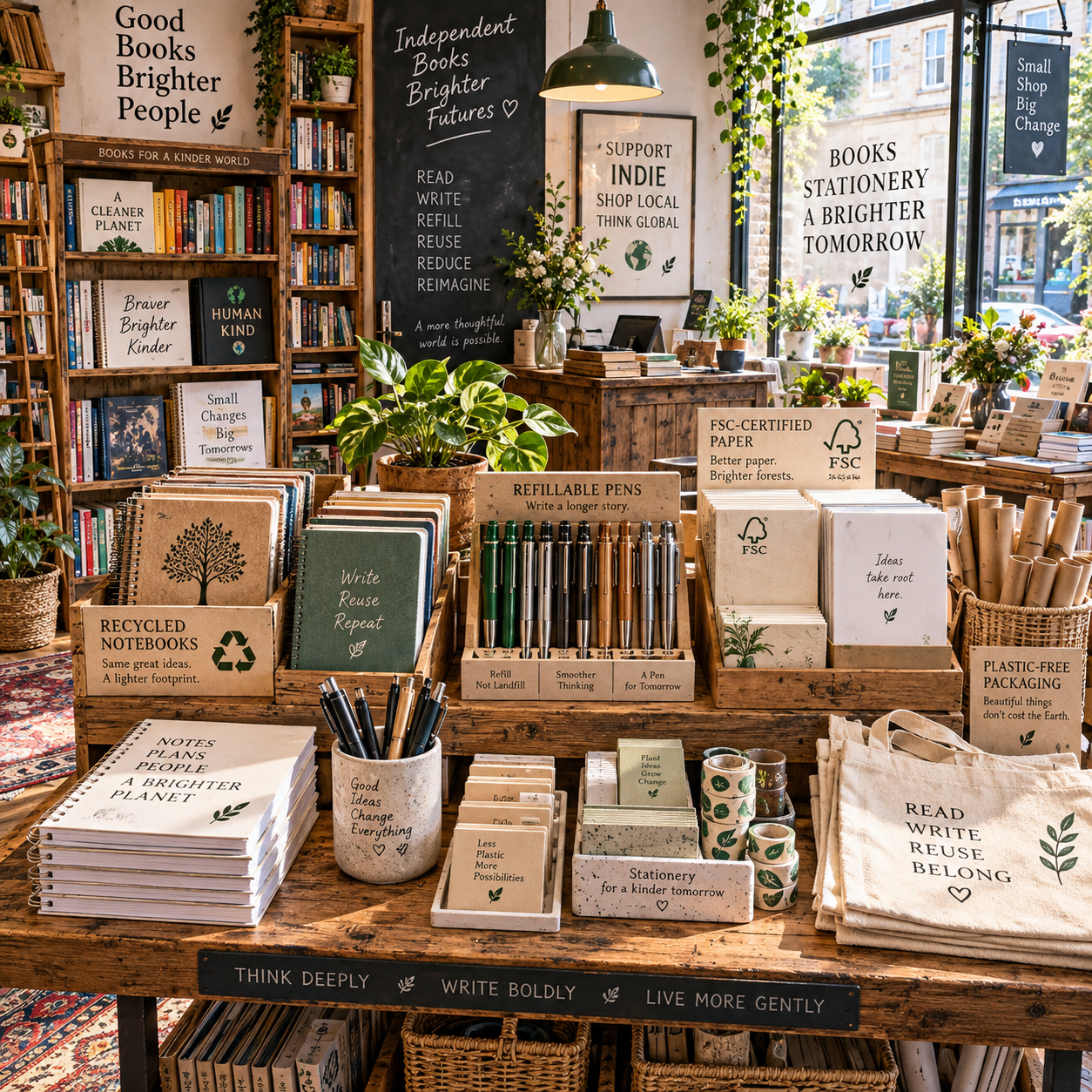
Eco-friendly stationery can strengthen a books and stationery shop’s product range when it is selected with the same care as books, gifts, and everyday essentials. Customers increasingly want responsible materials, but they still expect a notebook to open flat, a pen to write smoothly, and a desk accessory to last.
The practical approach is to treat sustainability as one part of product quality. Assess the material, manufacturing process, packaging, durability, supplier evidence, and end-of-life options before adding an item to your shelves. A smaller, credible range will usually serve your brand better than a large collection built on vague environmental language.
Define What Eco-Friendly Means for Your Shop
Eco-friendly stationery is stationery designed with reduced environmental impact across its materials, production, packaging, useful life, and disposal. Your shop should turn that broad term into clear buying criteria that staff and suppliers can apply consistently.
Start by writing a short sustainability policy for the product assortment. It might prioritize recycled paper, FSC-certified paper, refillable formats, durable construction, plastic-free packaging, and transparent sourcing. No product will perform perfectly across every category, so record both its strengths and limitations.
- Materials: Identify recycled content, responsibly sourced virgin fiber, recycled metals, plant-based components, or other materials. Ask whether claims refer to the whole product or only one part.
- Manufacturing: Look for information about where the item is made, how components are assembled, and whether the supplier can explain its environmental standards.
- Useful life: A durable notebook cover or refillable pen may avoid repeated replacement, provided customers can actually obtain compatible refills.
- Packaging: Favor minimal packaging, recycled cardboard, paper tape, and plastic-free packaging where product protection allows.
- End of life: Check whether the item can be recycled, refilled, repaired, composted, or separated into recyclable parts. Biodegradable stationery still needs suitable disposal conditions and should not be presented as universally compostable.
Use a simple scorecard with five headings: evidence, material, durability, packaging, and shop fit. This prevents an attractive label from outweighing poor performance or unverifiable sustainability claims.
Choose Sustainable Stationery Categories
Sustainable stationery categories that work well in a books and stationery shop include recycled notebooks, refillable writing tools, FSC-certified paper products, reusable notebooks, and long-lasting desk accessories. Choose products that solve familiar customer needs rather than creating a separate niche with little connection to your existing range.
Paper products for everyday use
Recycled paper notebooks, writing pads, envelopes, journals, and greeting cards are accessible entry points. Compare paper weight, opacity, texture, binding, and print quality. A recycled notebook that feathers with ordinary ink may disappoint customers, especially those buying fountain pens or premium writing tools.
FSC-certified paper products provide another responsible option. The Forest Stewardship Council certification relates to responsibly managed forest sources and chain-of-custody controls. Ask suppliers for current certification details rather than relying solely on packaging language. You can learn more about the certification framework through the Forest Stewardship Council.
Writing tools and desk accessories
Refillable pens offer a clear practical benefit: customers replace the ink rather than the complete pen. Stock replacement cartridges beside the pens and display the two products together. Also consider mechanical pencils, recycled-material rulers, metal clips, cork noticeboards, wooden pencil cases, and reusable notebooks with replaceable pages or erasable systems.
Biodegradable stationery can attract customers looking for alternatives to conventional plastics, but the description must be precise. Explain what component is biodegradable, under which conditions, and whether the product contains mixed materials. A durable item that remains in use for years may be preferable to a disposable item with a reassuring-sounding material claim.
Match the range to your customers: students need affordable writing tools, professionals may value refill systems and understated design, readers often respond to literary journals and reading logs, and gift shoppers may prefer carefully packaged stationery sets.
Evaluate Products and Suppliers Carefully
Evaluating sustainable suppliers requires evidence, samples, commercial details, and reliability checks. Request product specifications and certification documentation before placing a significant order, then test the item in real shop conditions.
Ask suppliers the following questions:
- What percentage of the product is recycled, FSC-certified, or made from another stated material?
- Does the certification apply to the finished product, the paper stock, or the manufacturing site?
- Where is the product manufactured, and what information is available about the supply chain?
- What packaging materials are used for individual units and shipping cartons?
- Are replacement parts, ink refills, or repair components available?
- What are the minimum order quantity, lead time, payment terms, and returns policy?
Order samples before committing to a case quantity. Test pens on the paper grades you sell, open and close notebook bindings repeatedly, check whether covers mark easily, and inspect packaging for unnecessary plastic. A product can meet a material preference yet fail the usability test.
Be cautious with words such as green, natural, earth-friendly, and carbon-neutral when they appear without definitions or supporting information. Sustainability claims should be specific enough for staff to explain in one sentence. If a supplier cannot provide evidence, describe the observable feature instead of repeating the claim.
Build a Balanced Product Assortment
A balanced product assortment combines affordable essentials, premium choices, giftable products, and complementary items that fit your books-and-stationery identity. Introduce eco-friendly stationery as a useful layer within the existing range, not as a disconnected display.
A practical starting structure could include:
- Everyday essentials: Recycled paper pads, pencils, school notebooks, envelopes, and refillable ballpoint pens.
- Mid-range upgrades: FSC-certified journals, reusable notebooks, refill systems, and durable desk organizers.
- Premium and gift items: Linen-bound journals, thoughtfully designed writing sets, literary-themed notebooks, and reusable stationery bundles.
- Complementary products: Reading logs, bookplates, bookmarks, planners, and note cards made with responsibly sourced paper.
Use a simple assortment filter: need, evidence, performance, margin, and fit. A product should satisfy a recognizable need, have credible information behind its sustainability story, work reliably, leave a reasonable margin, and look at home beside your books.
Avoid replacing the entire range at once. Trial two or three products in each price tier, review sales after an agreed period, and expand the lines that earn repeat purchases or useful customer comments. This protects cash flow and gives your team time to learn how to explain the products.
Present and Promote the Range Clearly
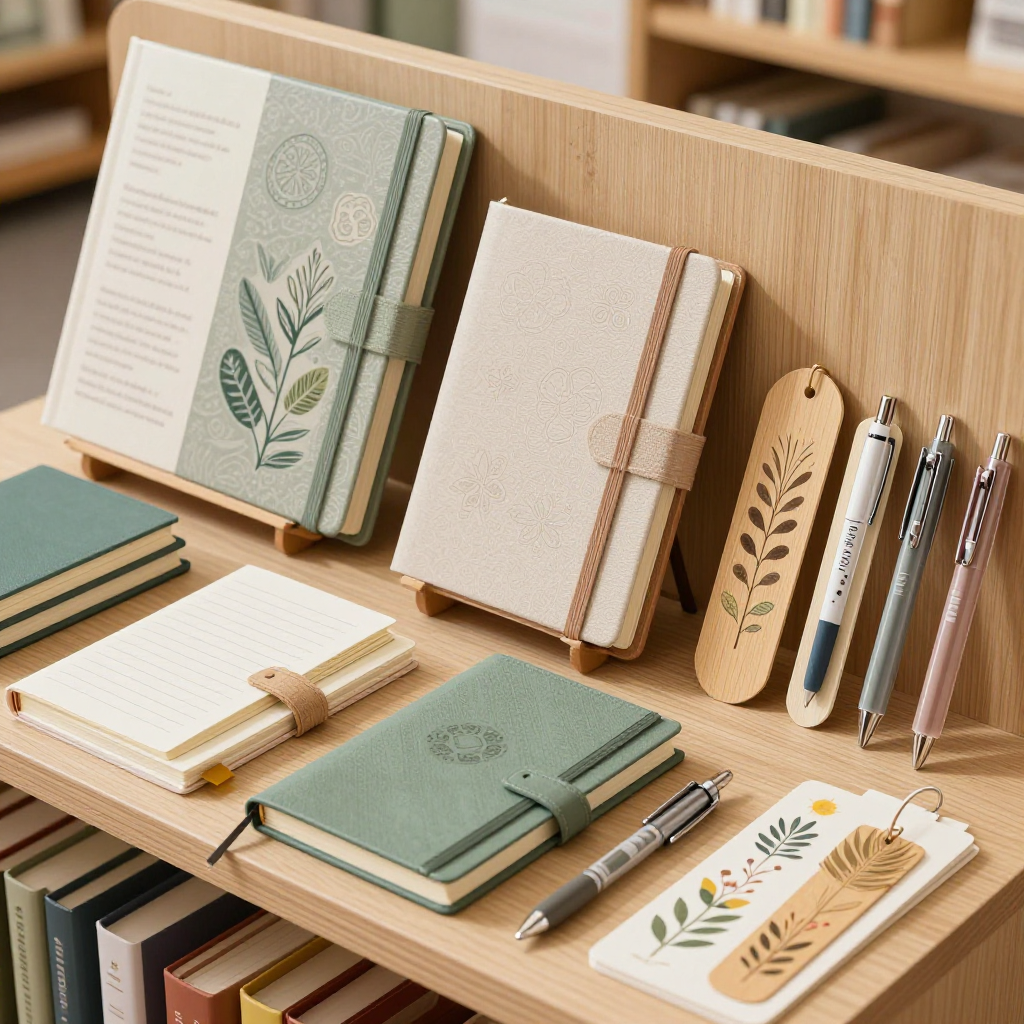
Clear presentation helps customers understand why a stationery product is more responsible without forcing them to decode marketing language. Place eco-friendly stationery where it remains connected to the tasks customers already perform, such as journaling, studying, planning, letter writing, and reading.
Use shelf cards or product labels that state one verified feature and one practical benefit. For example: “Made with recycled paper; smooth surface for everyday gel pens.” A refillable pen label could say: “Keep the body and replace the ink cartridge.” Avoid implying that one product has no environmental impact.
Group products by use as well as by material:
- Reading and journaling: reusable notebooks, reading logs, bookmarks, and archival-quality pencils.
- Study and work: recycled paper pads, refillable pens, folders, and desk organizers.
- Gifts: coordinated journals, writing sets, cards, and book pairings.
Train staff to answer three questions: What is it made from? What makes it last or reduce waste? How should it be disposed of or refilled? That short explanation is more persuasive than a wall of green slogans.
Product pages and promotional emails should use the same language as the shelf. If you mention FSC-certified paper, recycled content, or plastic-free packaging, keep the wording accurate and retain supplier evidence internally. Responsible promotion builds trust gradually; exaggerated sustainability claims can damage it quickly.
Manage Pricing, Stock, and Customer Feedback
Managing eco-friendly stationery means planning for price, stock depth, product durability, and repeat demand at the same time. Sustainable materials or certified supply chains may increase unit cost, but a higher price is acceptable only when quality and customer value are visible.
Calculate the full margin after freight, packaging, payment fees, markdowns, and expected returns. Offer an entry-level recycled notebook alongside a premium journal so customers can choose according to budget. For refillable pens, include refills in the sales forecast; the initial pen may have a lower repeat rate than the ink cartridge.
Begin with a controlled test:
- Choose a small number of products with different price points and uses.
- Set a review date, such as six to twelve weeks after launch.
- Track units sold, gross margin, returns, stock-outs, and refill purchases.
- Ask customers whether the product performed as expected and whether the sustainability information was clear.
- Reorder proven items, improve the display, or discontinue products that create confusion or complaints.
Do not judge a notebook only by first-month sales. Gift purchases may be seasonal, while refillable writing tools can develop value through repeat cartridge sales. Keep notes on durability issues, especially broken bindings, leaking pens, weak fasteners, and packaging damage.
Make Sustainability Part of the Shopping Experience
Sustainability becomes credible when the shop’s operations support its product message. Plastic-free packaging, refill guidance, recycling information, and consistent purchasing standards show customers that the range is part of a broader practice.
Review your own checkout materials. Replace unnecessary plastic sleeves with recyclable paper packaging where protection permits, reuse clean supplier cartons for stock movement, and choose paper tape if it suits your shipping process. Keep packaging minimal, but do not remove protection that prevents damaged books or stationery from becoming waste.
Add a small information card explaining how to dispose of common items. Paper products may be recyclable if they are clean and accepted locally; mixed-material notebooks, laminated covers, metal bindings, and adhesive components may require separation. Disposal guidance should reflect local recycling rules rather than making universal promises.
Make refills easy to find. A dedicated refill tray near writing tools, clear compatibility labels, and staff recommendations can turn a one-time sustainable purchase into a longer product relationship. Gather customer suggestions through receipts, short surveys, or informal conversations at the counter.
The strongest long-term model is a consistent one: verify claims, stock products that perform, explain limitations honestly, and improve the assortment from evidence. For a books and stationery shop, eco-friendly stationery works best when it feels like a natural extension of thoughtful reading, writing, learning, and gifting.
Frequently Asked Questions
What stationery products are considered eco-friendly?
Eco-friendly stationery may include recycled paper notebooks, FSC-certified paper products, refillable pens, reusable notebooks, durable desk accessories, and items with plastic-free packaging. The label depends on the full product story, including material composition, durability, manufacturing, and disposal.
How can a stationery shop verify sustainability claims?
Request certification details, chain-of-custody information, recycled-content percentages, material specifications, packaging details, and supplier policies. Test samples and avoid repeating claims that cannot be clearly documented.
Is eco-friendly stationery more expensive?
Some products cost more because of certified materials, smaller production runs, or durable construction. A tiered assortment lets customers choose an affordable option while premium products provide stronger design, longevity, or refillability.
How should sustainable stationery be displayed and promoted?
Display it by customer need, such as journaling, study, work, or gifts, and add concise labels explaining verified environmental features. Connect claims to practical benefits such as refillability, durability, or recycled content.
How can a shop reduce packaging waste?
Use appropriately sized recyclable packaging, remove unnecessary plastic, reuse suitable cartons, and provide clear recycling guidance. Protecting products from damage remains essential because discarded or replaced goods also create waste.