Sustainable Packaging Solutions for Book and Stationery Delivery
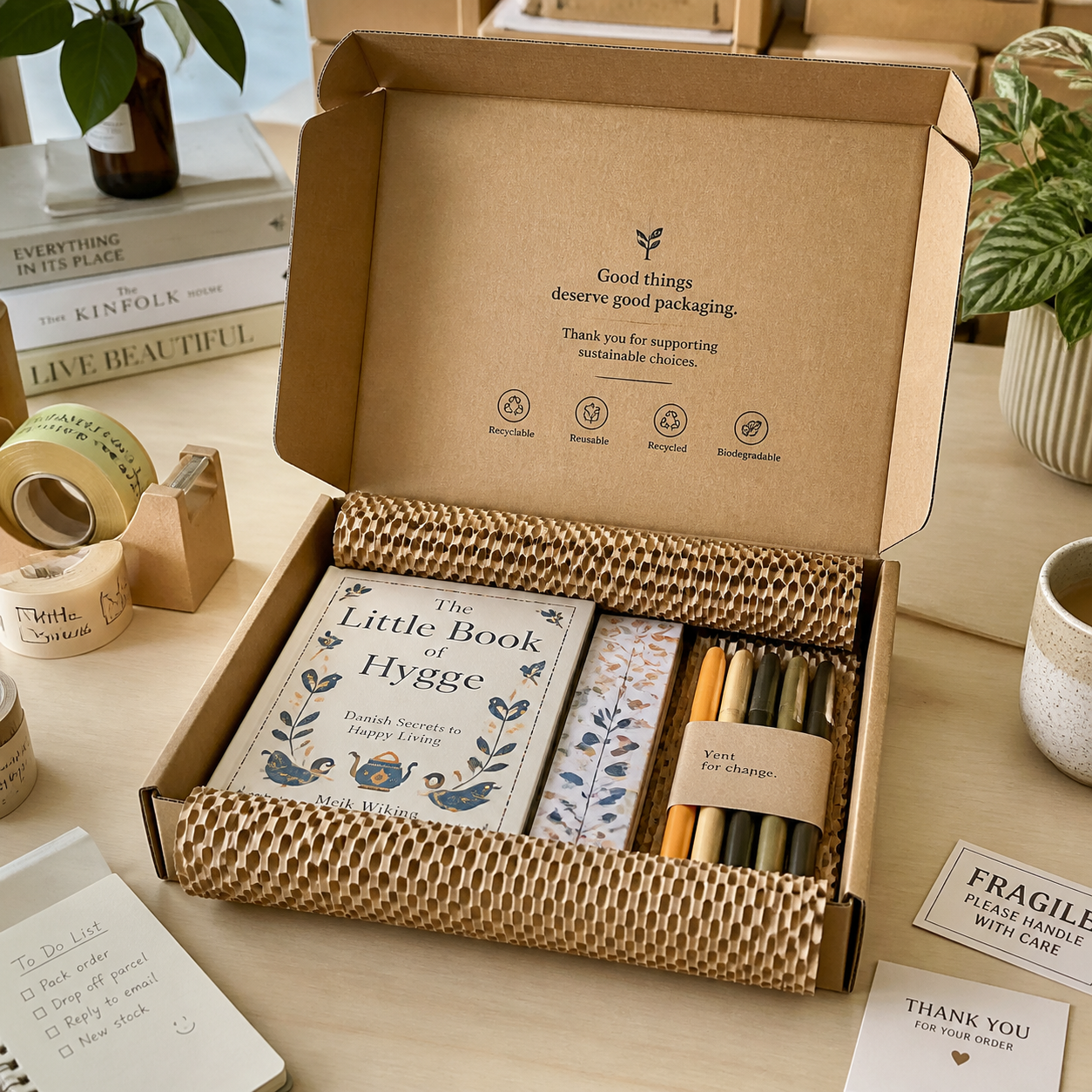
Books and stationery need packaging that can withstand sorting, handling, moisture, and pressure without creating unnecessary waste. Sustainable packaging solutions for book and stationery delivery combine recycled or recyclable materials, right-sized formats, dependable protection, and simple disposal instructions.
Why Sustainable Packaging Matters for Books and Stationery
Sustainable packaging matters because delivery materials affect waste, resource use, and the condition of the order when it reaches the customer. The right packaging protects books and paper goods while using only the material needed for a safe journey.
Books can suffer bent corners, scuffed covers, creased dust jackets, or moisture damage. Notebooks and greeting cards may arrive with crushed edges, while pens and art supplies can puncture or mark softer paper products. Removing protective layers without testing their performance can increase replacements, returns, and transport emissions.
A useful way to assess each parcel is the protection-to-material ratio: how much packaging is needed to prevent realistic delivery damage. A rigid recycled cardboard mailer may outperform a thin paper envelope for a hardcover book, even if the envelope uses less material. For lightweight stationery, however, paper padding and a snug recyclable paper mailer may be sufficient.
Sustainability also depends on what happens after delivery. Packaging that customers can identify, separate, reuse, or recycle easily has a clearer environmental advantage than a material that sounds greener but is rarely accepted by local waste services.
What Makes Packaging Sustainable?
Sustainable packaging uses responsibly sourced materials, minimizes excess, protects the product, and offers a realistic reuse, recycling, or disposal route. No single material is ideal for every book or stationery order.
Evaluate packaging materials against six practical criteria:
- Material sourcing: Prefer recycled content or responsibly sourced paper from suppliers that provide clear material information.
- Recyclability: Choose packaging that local recycling systems commonly accept, and avoid unnecessary mixed-material construction.
- Reusability: Durable mailers and boxes can serve another purpose when they remain clean and intact.
- Minimal excess: Right-sized packaging reduces unused space, filler, and parcel volume.
- Durability: Packaging must resist bending, crushing, abrasion, and ordinary handling.
- Simple disposal: Customers should know whether to recycle, reuse, compost, or place an item in general waste.
Recyclable does not mean the same as compostable, and compostable packaging is not automatically the most sustainable choice. Recyclable paper usually enters an established fiber-recovery system, while certified compostable packaging may require a commercial composting facility. Reusable packaging can avoid repeated single-use materials, but only when customers actually reuse it and the format is durable enough to last.
For reliable background on recycling terminology and local variations, consult guidance from the U.S. Environmental Protection Agency or the relevant waste authority in your delivery region.
Sustainable Packaging Options for Book Deliveries
The most suitable sustainable packaging for books is usually a right-sized recycled cardboard mailer or box, combined with paper-based protection where needed. The format should match the book’s size, weight, binding, and vulnerability.
Recycled cardboard mailers
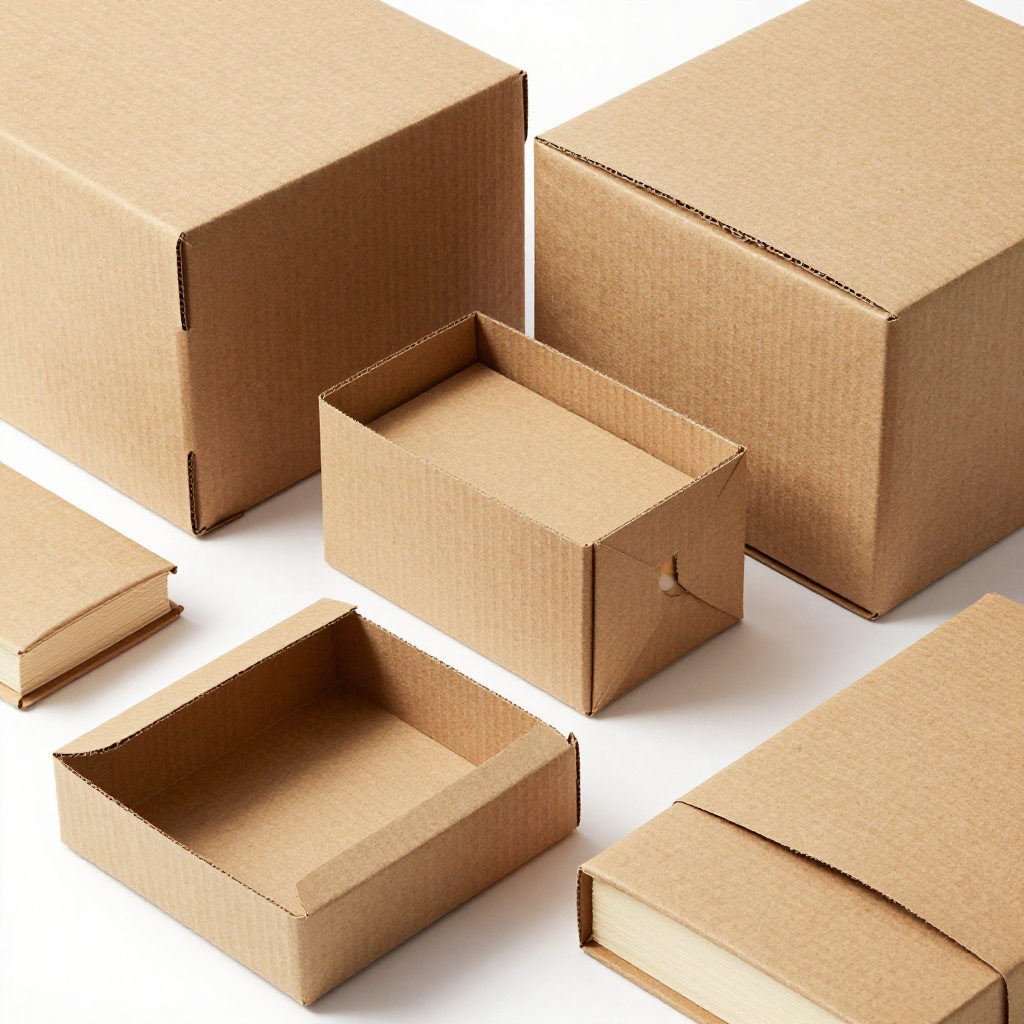
Recycled cardboard mailers work well for individual paperbacks, hardbacks, journals, and small book bundles. Their rigid panels reduce bending, while folded or adjustable designs can grip the book instead of leaving it loose inside a large carton.
Use a stronger corrugated box for several heavy books, oversized art books, or orders that need space between products. A box should allow a small amount of protective padding without leaving enough room for books to collide. Recyclable paper tape is preferable when it provides an adequate seal and does not compromise parcel integrity.
Paper-based protective layers
Paper padding, kraft paper, honeycomb paper wrap, and tissue paper can cushion covers and fill limited gaps. Tissue paper is particularly useful for protecting special editions, illustrated books, or stationery included with a book order, although it should not be treated as structural protection by itself.
Avoid placing a book directly against a rough cardboard edge if its cover is easily scratched. A clean paper sleeve or tissue layer can create separation. For rain-prone delivery routes, test whether the outer mailer provides enough moisture resistance; plastic-free packaging still needs a practical response to wet handling.
Sustainable Packaging for Stationery and Paper Goods
Stationery deliveries need packaging that prevents bending, surface marks, and small-item movement while keeping the parcel light. Recyclable paper packaging, rigid card inserts, and carefully arranged bundles suit most notebooks, cards, pens, and art supplies.
For notebooks, planners, prints, and greeting cards, place the items between rigid recycled-cardboard sheets or inside a snug paperboard mailer. This creates a flat protective sandwich without adding bulky filler. Grouping products by size also prevents smaller items from sliding across larger paper surfaces.
Pens, pencils, erasers, clips, and similar items can move during transit. Put them in a recyclable paperboard carton, paper pouch, or small box before placing them alongside notebooks. This prevents hard edges from pressing into covers and reduces the need for several separate wrapping layers.
Delicate stationery may need more careful treatment:
- Cards and prints: Use a rigid backing sheet and keep corners aligned.
- Spiral notebooks: Add clearance around the coil so it does not catch or crush neighboring products.
- Markers and bottled supplies: Separate them from paper goods and check caps or lids before packing.
- Art materials: Use internal paperboard dividers when graphite, metal, or boxed tools could mark paper surfaces.
Compostable packaging can be appropriate for selected lightweight products, but verify certification, moisture performance, and local processing options first. A compostable mailer that customers cannot process locally may create confusion rather than a useful disposal route.
How to Protect Orders Without Excess Packaging
To protect orders without excess packaging, select the smallest dependable format, group compatible products, stop movement, and test the finished parcel before changing materials. Less packaging is helpful only when it still prevents avoidable damage.
- Measure the order: Record the length, width, height, and weight of common book and stationery combinations.
- Choose the closest packaging size: Keep enough room for a protective layer, but avoid large empty spaces.
- Build stable groups: Place similarly sized books together and keep small hard items in their own paperboard compartment.
- Prevent movement: Fill gaps with folded kraft paper rather than loose handfuls of filler.
- Protect vulnerable points: Reinforce corners, dust jackets, exposed spirals, and glossy covers when the product requires it.
- Inspect the seal: Ensure the closure remains secure under normal handling and does not rely on excessive tape.
- Test realistic conditions: Shake, stack, and gently compress sample parcels. Review whether products shift, bend, or rub.
One common mistake is choosing a mailer solely because it is plastic-free. If it lets a hardcover move freely or offers little resistance to bending, the environmental cost of a damaged replacement may outweigh the material saving. Another mistake is overfilling a box: compressed paper goods can develop dents even when the outer carton looks strong.
Keep a simple damage log by product type. If three notebook orders arrive with bent corners in a month, adjust the insert or mailer for that format rather than adding more packaging to every order.
Customer-Friendly Packaging and Disposal Instructions
Clear recycling and disposal instructions help customers handle packaging correctly and make the unboxing experience feel considered. Put the guidance where it is easy to see, using plain language and material-specific directions.
A small printed note or label can say:
- Remove any shipping label or tape that your local recycling service does not accept.
- Flatten clean cardboard and place it with household paper recycling where permitted.
- Reuse the mailer for storage, gifting, or another delivery if it remains undamaged.
- Recycle clean paper padding and tissue paper according to local rules.
- Check local facilities before placing compostable packaging in a compost collection bin.
Do not claim that every paper component is recyclable if it includes coatings, laminates, glitter, plastic windows, or heavy adhesive. Separate components where practical and describe uncertainty honestly. Recycling rules vary by country, municipality, and facility, so customers should follow local instructions rather than a universal promise.
Reusable packaging deserves its own explanation. A durable box or mailer can become a useful storage container for books, stationery, or future gifts. That second life is most likely when the packaging opens cleanly, looks presentable, and does not carry excessive branding or difficult-to-remove labels.
Building a More Sustainable Delivery Packaging Process
To build a more sustainable delivery packaging process, standardize a small range of materials, test them with real orders, track damage and waste, and improve the system gradually. A practical process is more reliable than switching materials based on appearance alone.
Use this implementation checklist:
- Map product groups: Separate single books, multi-book orders, flat stationery, small accessories, and fragile supplies.
- Set packaging specifications: Define acceptable mailer dimensions, board strength, paper padding, tape, and maximum empty space.
- Prioritize simple materials: Favor recyclable or reusable packaging that customers can identify without specialist knowledge.
- Run a protection trial: Pack representative orders and inspect them after stacking, movement, and exposure to ordinary delivery conditions.
- Measure outcomes: Track packaging weight, material consumption, customer complaints, and damage-related replacements.
- Review quarterly: Remove formats that create excess waste and adjust sizes as product ranges change.
The goal is a balanced system: **plastic-free packaging** where it performs well, recyclable materials where local systems support them, reusable formats where repeated use is realistic, and compostable packaging only where disposal conditions are clear. Good sustainable packaging protects the order first, then makes the material pathway easy to understand.
Frequently Asked Questions
What is the most sustainable packaging for shipping books?
The most sustainable option is usually a right-sized recycled cardboard mailer or box that prevents damage and can be recycled or reused after delivery. The best choice depends on book weight, size, weather exposure, and local recycling facilities.
Are paper mailers suitable for stationery deliveries?
Paper mailers suit lightweight, non-fragile stationery when items are bundled and protected from bending. Add rigid cardboard backing or choose a paperboard mailer for notebooks, cards, prints, and other flat products.
How can books be protected without using plastic?
Use recycled cardboard mailers, corrugated boxes, paper sleeves, kraft paper, honeycomb paper, and tissue paper. Choose a close-fitting format and prevent movement so the book does not rub against the package or bend in transit.
Is compostable packaging always the best option?
No. Compostable packaging is useful only when it meets a recognized standard and customers have access to the appropriate composting service. Recyclable cardboard or reusable packaging may create a clearer, more practical end-of-life route.
How should customers dispose of book and stationery packaging?
Customers should reuse intact packaging where possible, then follow local recycling guidance for clean cardboard and paper. They should remove unsuitable tape or labels when required and confirm whether any compostable component is accepted locally.